



By The Metro Record Staff
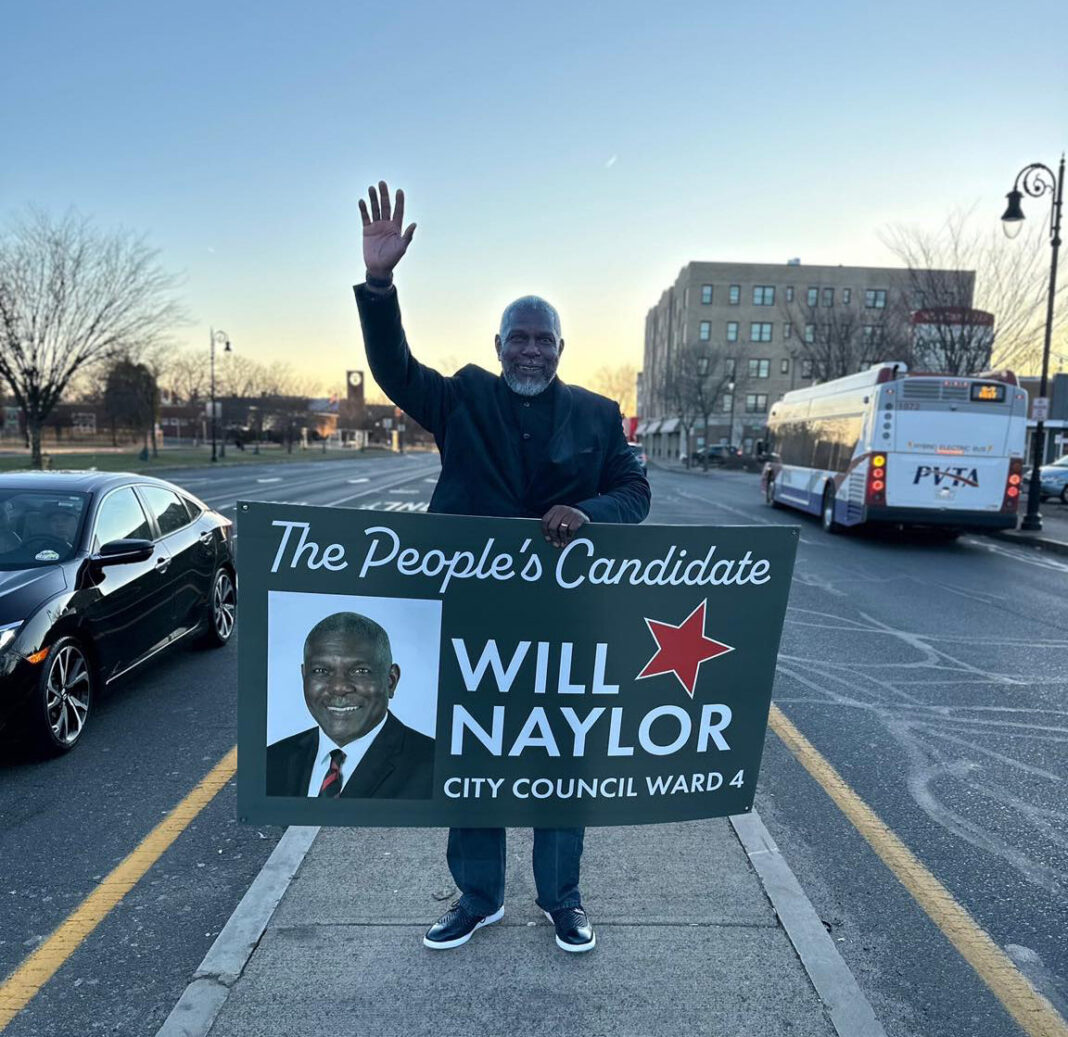
SPRINGFIELD, Mass. — On a cool evening in Mason Square, Willie J. Naylor Jr. stood before a small group of neighbors and introduced himself not as a politician, but as “The People’s Candidate.” The phrase, repeated often in his campaign materials, is meant to capture his vision of leadership rooted in faith, family, and neighborhood ties.
Naylor’s candidacy for the Ward 4 City Council seat leans heavily on his reputation as a community member who has lived the struggles and strengths of Mason Square. His campaign literature opens with a declaration of personal grounding: his relationship with God, his commitment to his wife and family, and his devotion to the church he attends. For many voters, that framing may be appealing, signaling a leader who values integrity and personal responsibility. But Springfield is a diverse city, and some observers caution that leaning too heavily on religious language risks alienating secular constituents or those of different faith traditions.
At the heart of his platform is public safety. Naylor speaks of more foot patrols, stronger partnerships between police and residents, and investments in programs that steer young people away from violence. He names local groups with familiarity—ROCA, NNCC YouthBuild, the Darrell Lee Jenkins Youth Center, and The Parent Village—arguing that mentorship, after-school support, and restorative justice offer more hope than incarceration. He also emphasizes culturally competent mental health and addiction services through agencies like Gandara and the African Diaspora Mental Health Agency. What the plan does not yet answer is how these programs will be sustained if nonprofit funding runs out, or how City Hall itself will ensure their longevity.
Economic development is another key piece of Naylor’s campaign. He proposes more support for small businesses, apprenticeships, and training programs in collaboration with community colleges, unions, and organizations like HOPE CDC and the Latino CDC. He has floated the creation of a Minority Contractors Association to ensure that local workers are at the center of redevelopment projects. These ideas have drawn attention, but they remain broad, with little detail on how such an association would be organized or funded, and how new initiatives would avoid duplicating existing state and city programs.
On housing, Naylor promises tenant protections, transitional housing for vulnerable families, and pathways to homeownership through groups like Way Finders and Neighbor to Neighbor. Yet his call for “rent stabilization” is complicated by Massachusetts law, which prohibits traditional rent control. Without clarification, voters may question how his proposals would work in practice or how he intends to ensure new development includes affordable units.
Infrastructure issues—potholes, crosswalks, lighting, bus routes—fill much of his list. He speaks often about the need for environmental justice, pointing to Springfield’s alarmingly high asthma rates. He highlights digital equity and the need for broadband access, though the details of that vision are brief. ShotSpotter technology appears in his plan, though in other cities the program has faced scrutiny over effectiveness and potential over-surveillance of minority neighborhoods. And like many candidates, Naylor has not explained where the money for these improvements would come from, or which projects he would prioritize first.
What separates Naylor from many challengers is his willingness to take firm stances on contentious issues. He has opposed new beer and wine licenses in Mason Square, arguing that more alcohol establishments would further strain neighborhoods already battling substance abuse and mental health challenges. He has called for Eversource to repair gas lines but insists residents should not bear higher rates for what he describes as the company’s basic obligation. He has spoken against federal cuts to HIV programs, framing them as an attack on vulnerable communities, and has defended Diversity, Equity and Inclusion Initiatives as essential to Springfield’s future.
Beyond the substance of his platform lies the question of power. Springfield’s political culture has long been defined by a strong mayor in Domenic Sarno, who has earned a reputation for being combative, condescending, and dismissive of Black councilors who resist his direction. For decades, Black elected officials in Springfield have been pressured to fall in line with the mayor’s agenda or face political isolation. Naylor has not yet fully addressed how he would navigate that relationship. Would he attempt compromise, staking out areas of common ground with Sarno? Or would he position himself as an independent voice willing to clash with City Hall if necessary? For many Ward 4 residents, weary of seeing their representatives marginalized, the answer to that question may matter as much as any line item in his platform.
Naylor’s campaign may also face questions of focus. His platform touches nearly every issue, from housing to broadband to addiction recovery, but lacks clear prioritization. Voters may want to know his top three goals for his first months in office and how he intends to measure success. They may also press him on whether he supports a civilian police review board, how he would secure affordable housing within state law, and what benchmarks would define progress on safety or jobs.
In Mason Square, residents are used to promises. They know well the gaps in lighting, the dangers of traffic, the pressure of rent, and the pull of the streets on their children. Naylor’s platform, filled with references to familiar parks, programs, and organizations, has the feel of someone who knows the ward intimately. But the test ahead is whether that familiarity can be translated into legislation, budgets, and results — and whether “The People’s Candidate” can stand firm in a political system that has not always made space for independent Black voices.
Faith and fairness may open doors. But results, and the willingness to challenge City Hall, will determine if Willie J. Naylor Jr. becomes not just the people’s candidate, but the people’s councilor.