


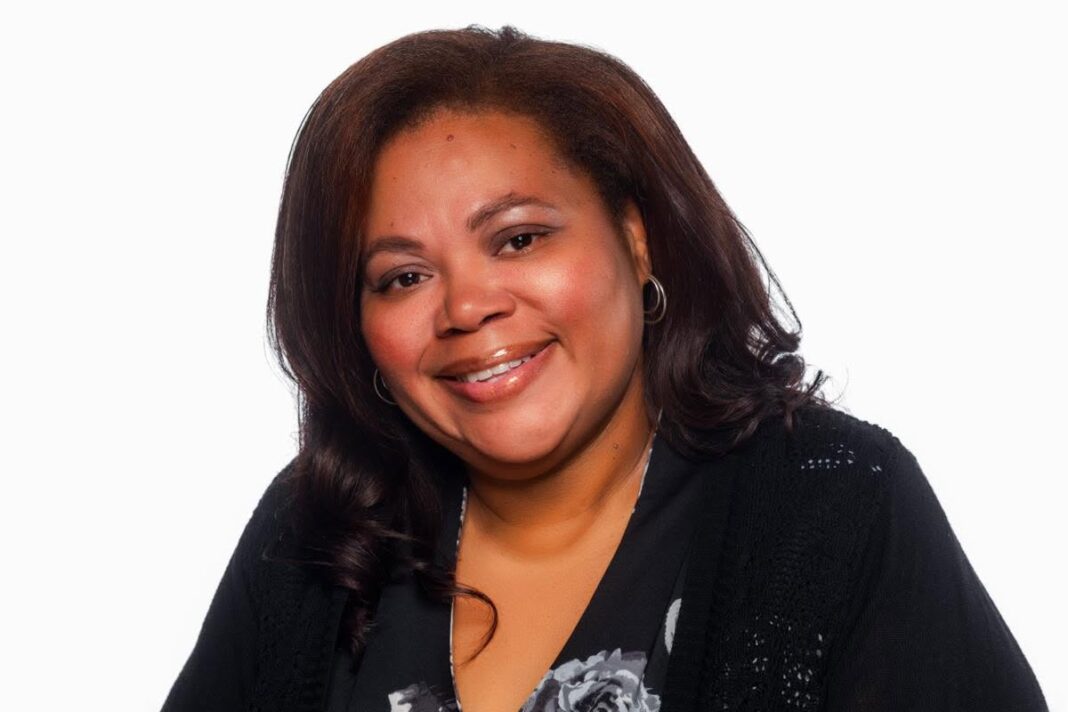

After struggling to arrange her husband’s funeral, Rhonda Hall-Reynolds began asking a question many families avoid until it is too late: Who will take care of the arrangements when someone dies?
By Darryl E. Moss | The Metro Record
Death has a way of exposing the things families have not discussed.
There are the obvious questions about how someone lived, the memories they left behind, and the people who will miss them. Then there are the practical matters that arrive with remarkable urgency. Who will contact the funeral home? Where will the money come from? What arrangements did the deceased want? Who is responsible for making sure everything gets done?
For Rhonda Hall-Reynolds, those questions became painfully personal when her husband died.
She had to navigate the arrangements while coping with the loss of someone she loved. There was life insurance, but complications involving the death certificate delayed access to the proceeds. The funeral home needed to be paid. The arrangements could not simply wait for the insurance company to resolve its paperwork.
She turned to GoFundMe.
The experience left her with a conviction that would eventually become the foundation of her business.
“I don’t want anyone to ever have to do a GoFundMe to make sure that their loved one has dignity at the end of their life,” she said during a conversation with The Metro Record.
It is an uncomplicated statement, but one that speaks to a problem familiar to churches, extended families, and communities across the country. People die unexpectedly. The families they leave behind are often expected to make expensive decisions at precisely the moment when they are least equipped to make them.
Hall-Reynolds decided that her experience should serve a purpose beyond her own family.
Today, through SANA VIIA, a business whose philosophy is expressed in the words “Intentional Living, Lasting Change,” she introduces families to funeral assistance memberships offered through her partnership with Assure for Life. Her work is rooted in a simple proposition: Preparing for death is one of the ways people demonstrate their responsibility to the living.
The Financial Reality of Grief
The cost of a funeral is rarely the first thing on someone’s mind when a loved one dies. It becomes important very quickly.
The National Funeral Directors Association’s 2023 General Price List Study placed the national median cost of a funeral with a viewing and burial at $8,300. A funeral with a viewing and cremation had a median cost of $6,280. Both figures represented increases from 2021.
Those numbers do not include every expense. Cemetery charges, grave markers, flowers and obituary notices can add considerably to the final bill.
For families living from paycheck to paycheck, even those with steady employment and modest savings, an unexpected expense of that size can be destabilizing.
The Federal Reserve’s 2025 Survey of Household Economics and Decisionmaking, released in May 2026, found that 63 percent of adults could cover a hypothetical $400 emergency expense entirely with cash, savings or a credit card paid off at the next statement. The figure was down from 68 percent in 2021.
The survey does not specifically address funeral expenses. It does, however, illustrate the financial circumstances in which many American households are making decisions.
The problem is not always the absence of money altogether. Sometimes it is the absence of money at the moment it is needed.
That distinction is central to Hall-Reynolds’s story.
Life insurance can provide a financial benefit to designated beneficiaries, but the existence of a policy does not guarantee that the money will be available immediately. Claims require processing. Documentation must be completed. And the person receiving the insurance proceeds ultimately decides how that money will be used.
Hall-Reynolds has seen families discover that having insurance and having funeral arrangements paid for are two different things.
Her own experience made that distinction difficult to ignore.
A Different Approach to Funeral Preparation
Through SANA VIIA, Hall-Reynolds introduces families to Assure for Life, a funeral assistance membership program that arranges specified services through funeral homes.
She is careful to distinguish the membership from life insurance.
There is no traditional life insurance payout to a beneficiary. Instead, the program is structured around funeral related services and arrangements negotiated through the company.
During the interview, Hall-Reynolds described a family member who encountered delays in receiving life insurance proceeds because of complications with a death certificate. She said Assure for Life paid the funeral home within two days, allowing the family to proceed with arrangements.
The experience reinforced her belief that families need to think beyond whether they have insurance. They also need to consider what will happen during the period between a death and the eventual payment of insurance benefits.
The membership she presented costs $85 per month for up to seven eligible individuals. At that rate, the annual expense is $1,020.
The company also publishes a lower promotional rate under certain state residency conditions.
The attraction, Hall-Reynolds explained, is that the people included in the membership do not necessarily have to be related. Families may consider including extended relatives or other loved ones, subject to the program’s eligibility requirements.
The company’s published terms specify that the primary account holder must be between 18 and 65 and reside in the United States. Individuals age 65 or younger may be included regardless of their relationship to the account holder. Certain provisions allow the account holder’s parents or partner to be included up to age 80, subject to additional conditions.
There are also waiting periods. According to the company’s published membership information, benefits for natural causes of death become available after 180 calendar days following the first payment. Benefits for accidental or violent death are listed as beginning on the third business day after enrollment and the first payment.
These are important distinctions for anyone considering the program.
The services described include transportation to the funeral home, preparation, funeral director services, a basic casket or cremation and an urn, and certain documentation. Hall-Reynolds also discussed temporary cold storage, transportation to the cemetery, and assistance with returning remains to certain countries of origin.
Cemetery plots and associated cemetery charges are separate expenses. Families choosing services or merchandise beyond the covered arrangements may also incur additional costs.
The membership is designed around specified services rather than an unlimited funeral budget. Understanding those boundaries is part of understanding what the program offers.
The Conversations Families Put Off
During our conversation, I found myself thinking about the number of times I have watched churches and community organizations respond to an unexpected death.
A pastor makes a telephone call. Someone begins collecting donations. A funeral program needs to be designed and printed. Musicians, transportation, funeral home arrangements, and cemetery expenses all have to be coordinated.
I have personally watched families struggle with these responsibilities. I have seen people reach into their own pockets to help someone else bury a child, a parent, or a spouse.
There is something deeply admirable about the way communities come together during those moments. But there is also a larger question worth asking.
Why are so many families encountering these circumstances without a plan?
Hall-Reynolds believes part of the answer is that people do not like talking about death. Some consider it uncomfortable. Others believe that discussing it somehow invites it. Still others are so occupied with the immediate demands of living that planning for what happens afterward seems like a luxury.
The result is that families frequently make decisions under pressure.
The Federal Trade Commission has established protections intended to give consumers greater control over funeral purchases. Under its Funeral Rule, funeral homes must provide itemized price information, and consumers generally have the right to select individual goods and services rather than purchase an unwanted package.
Families also have options that may reduce costs. A casket is not legally required for cremation, and consumers can ask funeral homes about direct cremation and alternative containers.
For Hall-Reynolds, however, the issue extends beyond the cost of a casket or the selection of a funeral home.
It is about having the conversation before the emergency.
Who knows your wishes? Who has access to the necessary documents? Who will make the decisions? What money will be available? And what responsibilities will fall on the people you leave behind?
These questions are not limited to older adults. Unexpected death is not confined to any particular generation.
A Philosophy That Extends Beyond Death
Hall-Reynolds’s interests extend into other areas of family and community well-being.
During the interview, she discussed her work with Sana Viia Legacy Farm and her background as a certified organic farmer. She spoke about wanting her family and friends to eat better, live better, and become more conscious of the choices they make.
She sees a connection between those interests and her work with SANA VIIA.
For her, intentional living means considering the full picture of a person’s life. It includes physical well-being, financial preparation, family relationships, spiritual awareness, and the responsibility to leave something meaningful for those who follow.
She describes herself as an educator by choice. Her interest in sharing information is rooted in the belief that people make better decisions when they understand the choices available to them.
“We are doing things intentionally,” she said during the interview. “We are not out here doing GoFundMes. We are planning for dignified burials, dignified end of life transitioning.”
There is an important distinction in that statement. She is not suggesting that families who seek financial assistance have somehow failed. Rather, she wants people to have alternatives before they find themselves in that position.
Her approach is less about the inevitability of death than the responsibility that comes with knowing it will eventually happen.
The Meaning of Dignity
One of the more revealing parts of our conversation came when Hall-Reynolds spoke about her relationship with her community.
“I love my community. I love my people, and we just gotta do better,” she said.
She spoke about being her brother’s and sister’s keeper, an expression of responsibility that has long held meaning in communities where family extends well beyond the people who share a household.
That sense of responsibility informs the work she is doing.
For some families, the challenge is not simply finding the money to pay for a funeral. It is knowing where to begin. For others, it is understanding what an existing insurance policy will actually provide and whether those benefits will be available when needed.
Hall-Reynolds wants families to recognize that there are different ways to prepare. A funeral assistance membership is one option. Life insurance, personal savings and advance funeral arrangements are others. Each serves a different purpose, and families must understand how those choices fit together.
Her business is an invitation to begin that conversation.
It is also a reminder that preparation is not necessarily an act of self preservation. Sometimes it is an act of generosity toward people who will have enough to deal with when the time comes.
We spend considerable time discussing what we want to accomplish during our lives. We talk about our children, our homes, our careers and the things we hope to leave behind.
We spend considerably less time discussing what happens when we are no longer here.
Hall-Reynolds has made that neglected conversation the center of her work.
Her journey began with a loss she could not prevent. What she has chosen to do with that experience is help other families approach an inevitable part of life with greater awareness and preparation.
The people we love cannot be spared every hardship. But sometimes we can spare them a few.
And perhaps that is where the real meaning of planning begins.
CONNECT WITH RHONDA HALL-REYNOLDS
SANA VIIA
Intentional Living, Lasting Change
Through SANA VIIA, Rhonda Hall-Reynolds provides information about funeral assistance membership options available through Assure for Life.
Telephone: (413) 500-0577
Families interested in learning more can contact Rhonda directly to discuss membership options and available services.