


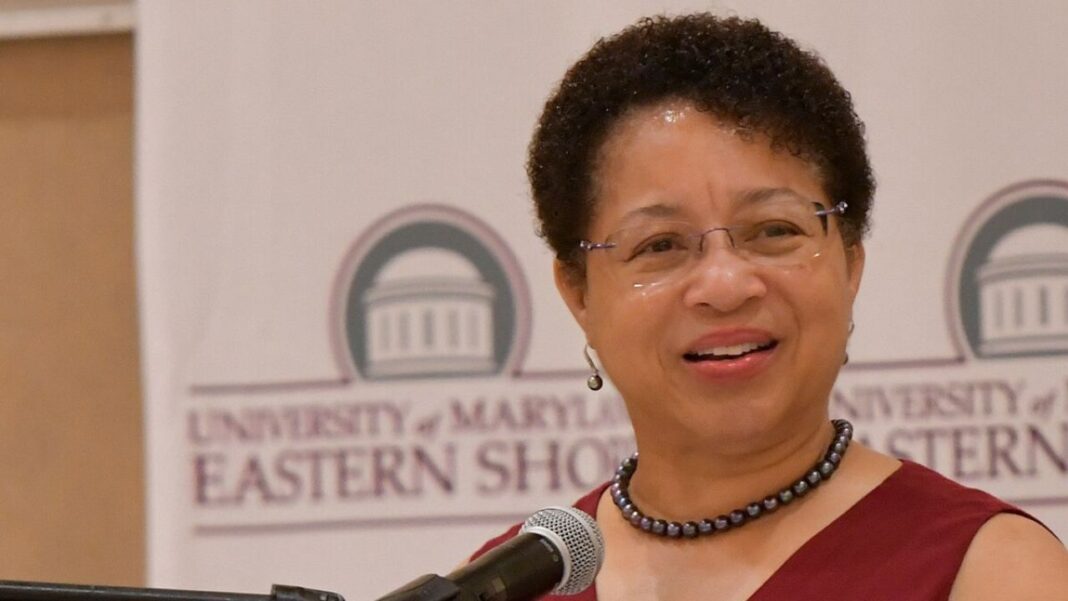

UMES President Dr. Heidi M. Anderson Files Lawsuit to Defend Her Name and Institution
By The Metro Record |
Princess Anne, MD — In the face of escalating public accusations, Dr. Heidi M. Anderson, President of the University of Maryland Eastern Shore (UMES), has filed a million-dollar defamation lawsuit against former professor Dr. Donna Satterlee—asserting a firm stand for truth, leadership, and institutional integrity.
The lawsuit, filed in Somerset County, comes after weeks of public attacks on Anderson’s character and academic credentials. The allegations—circulated in various media outlets—accuse Dr. Anderson of plagiarism in her 1986 dissertation at Purdue University. Now, Anderson is choosing to answer with the power of the law and a deep commitment to truth.
“I have tried to remain silent as long as possible, but these continued attacks on my name, my reputation, and my institution must stop,” Dr. Anderson said in the official press release. “Under the advice of counsel, I have taken legal action and look forward to my day in court.”
Allegations Labeled False and Defamatory
The press release makes clear that Anderson views the claims as “false, defamatory, and damaging” to her personal and professional reputation. According to her legal team, the plagiarism accusations are not only unfounded but also in conflict with academic codes in place at the time the dissertation was completed.
Attorney James L. Walker, Jr., who is representing Dr. Anderson, emphasized the strength of the case:
“We stand firmly with Dr. Anderson. After carefully reviewing the dissertation and all supporting materials, it is clear that no plagiarism occurred under the academic code of conduct in place during the 1980s,” Walker said. “When individuals make false and harmful statements, there are consequences. We look forward to proving our case in court.”
Leadership Backed by Results
The allegations arrive in the wake of some of the most transformational years in UMES history. Under Dr. Anderson’s leadership, the university has:
- Raised over $38 million in four years
- Secured a $38 million gift from philanthropist MacKenzie Scott, one of the largest in the university’s history
- Landed major grants including:
- $30 million from NOAA
- $2.5 million from the Howard Hughes Medical Institute (making UMES the first HBCU to receive this award)
- Increased sponsored research by 33%
- Opened a $92 million Pharmacy and Health Professions Complex
- Launched new academic programs, including graduating UMES’s first Physician Assistant class
- Increased student enrollment by 5.5% and boosted retention by 11%
These accomplishments speak not only to strategic leadership, but to the enduring impact of Anderson’s presidency, particularly within a historically Black college and university (HBCU) landscape that often fights for visibility and equitable resources.
A Legacy of Integrity and Service
Dr. Anderson’s story is one of resilience. A first-generation college graduate with three degrees from Purdue University, she has spent more than two decades in higher education leadership.
She has been recognized as one of Maryland’s Top 100 Women, received the Influential Marylander Award, and remains active in community and statewide leadership organizations.
Her decision to take legal action is in line with the values she’s modeled throughout her career: openness, accountability, and an unwavering pursuit of excellence.
Legal Team Brings National Experience
Representing Dr. Anderson is Attorney James L. Walker, Jr., a widely respected figure in entertainment and business law. Based in Atlanta, his high-profile past and present clients include Soledad O’Brien, Jamie Foxx, the Isaac Hayes II Estate, and the late Aretha Franklin.
Walker’s litigation background includes high-stakes cases in federal court, and he brings the same level of rigor and strategy to this case. He is joined by Maryland-based attorney Randy Evan McDonald to lead the litigation team.
A Fight for Truth and Institutional Dignity
As this lawsuit progresses, Dr. Anderson is not just defending herself—she’s defending the progress and promise of an institution that serves thousands of students, many of whom are from historically underserved backgrounds.
In these days and times, Black women in leadership are too often undermined. Anderson’s stance sends a powerful message: reputations built on service and achievement will not be dismantled by rumor or resentment.
? Editor’s Note
This article reflects The Metro Record’s mission to highlight leadership, truth, and community strength—especially within institutions that serve marginalized and underrepresented populations. We will continue to follow this case and provide community-centered updates.