



By Staff Report
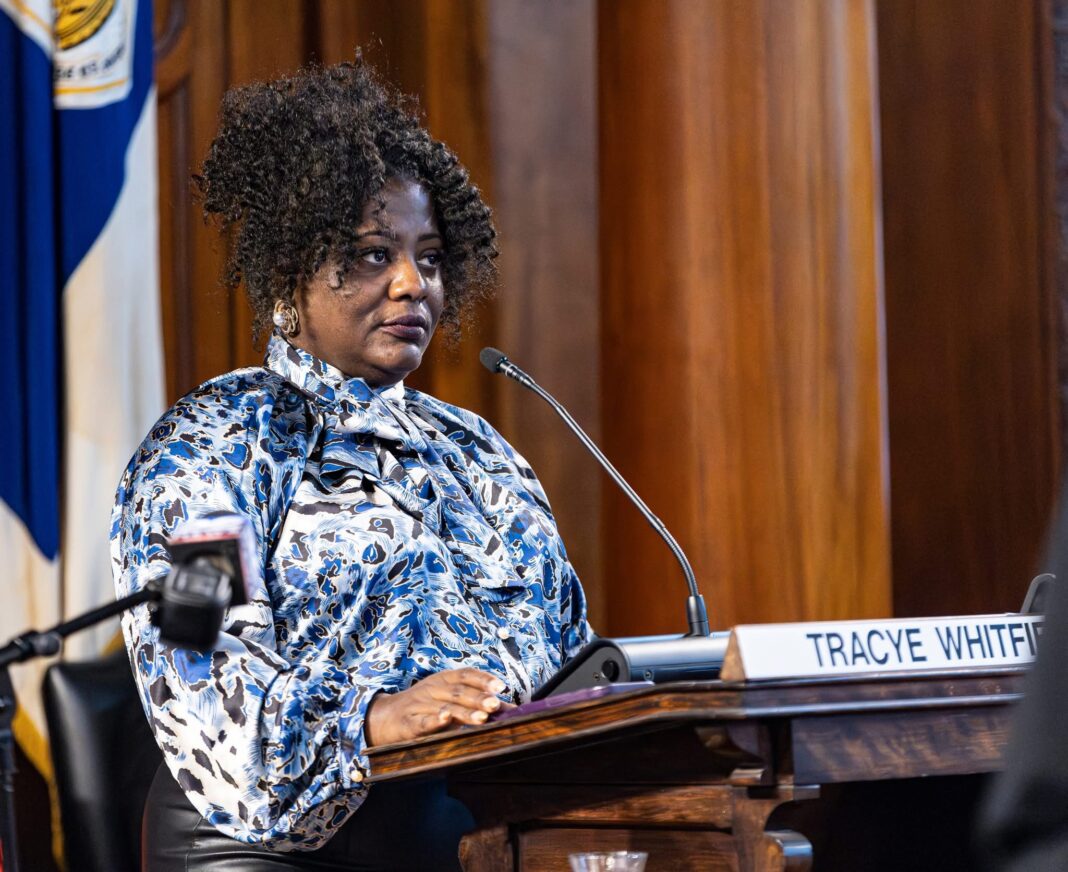
SPRINGFIELD — As the Springfield City Council considers whether to rescind a recent vote involving a vacant city-owned parcel, the ethics review surrounding Council President Tracye Whitfield has prompted broader concern within the Black community over timing, scope, and unequal scrutiny, particularly as Whitfield stands first in the city’s line of succession.
City Solicitor Stephen Buoniconti has recommended that the Council undo its decision to abandon a parcel at the corner of Wisteria and Wallace streets, citing conflict-of-interest violations after Whitfield presided briefly over a meeting in which her son petitioned for the land. Whitfield later recused herself from the proceedings and did not vote.
Whitfield has acknowledged that she should have stepped away from presiding earlier but disputes claims that her actions were improper or malicious.
“The distinction here involves timing, not whether I recused at all,” Whitfield said in written responses. “Once the concern was raised, I immediately removed myself from the proceedings and did not participate further.”
Review Expands Beyond Original Vote
While some observers say rescinding the vote may be appropriate to correct the procedural issue, others question why the law department’s review extended beyond the February meeting to Whitfield’s appearances before city boards in 2024 and 2025, matters that had previously proceeded without objection.
Andrew Keaton, a Springfield-based cultural organizer, said the retroactive scope of the inquiry has raised concern.
“If these actions were improper in 2024, the question is why they weren’t flagged then,” Keaton said. “What people are reacting to is not accountability, it’s the decision to look backward only after power dynamics changed.”
The expanded review also examined recent city land auctions in which Whitfield’s company successfully purchased two parcels through a public bidding process.
Succession and High-Stakes Governance
The ethics review unfolds amid a sensitive political moment. Mayor Domenic Sarno is undergoing treatment for cancer, and under the city charter, the City Council President would assume mayoral duties if the office became vacant.
At the same time, Springfield is preparing for a courthouse redevelopment project projected to cost approximately $2 billion, one of the largest public investments in the city’s history.
Robert Jones, former chair of the Association of Black Business and Professionals, said those realities cannot be ignored.
“When succession and major capital projects are in play, scrutiny intensifies,” Jones said. “The concern in the Black community is whether that scrutiny is being applied evenly, or strategically.”
History of Independence
Whitfield has previously demonstrated independence from city leadership, including testifying on behalf of Darryl Moss in a successful lawsuit against the mayor and the City of Springfield.
Jones said that independence can come with consequences.
“Black leaders who don’t align neatly with existing power structures are often viewed differently,” he said. “Mistakes become patterns. Process issues become questions of character.”
Focus on Process and Reform
Whitfield has emphasized that any motion to rescind the land vote must be initiated by another councilor, not the Council President alone, and said she will ensure any such action is handled lawfully and transparently.
She has also pointed to the absence of real-time legal counsel during the meeting as a systemic concern, calling for stronger ethics training and clearer procedural guidance for councilors.
“My focus is on ensuring clarity, compliance, and strong governance going forward,” Whitfield said. “That includes making sure the City Council has the legal support it needs to avoid situations like this in the future.”
Community Reaction
While Whitfield has stated she is not framing the issue as racial, she has acknowledged heightened scrutiny as Springfield’s first Black City Council President.
Keaton said that acknowledgment resonates with many residents.
“Accountability is important,” he said. “But accountability without consistency feels like punishment. People want to know why this level of examination happens now, and not before.”
As the City Council determines its next steps, community leaders say the outcome will signal whether Springfield can enforce ethics rules while maintaining public trust and fairness, particularly at moments when Black leadership stands closest to real authority.