


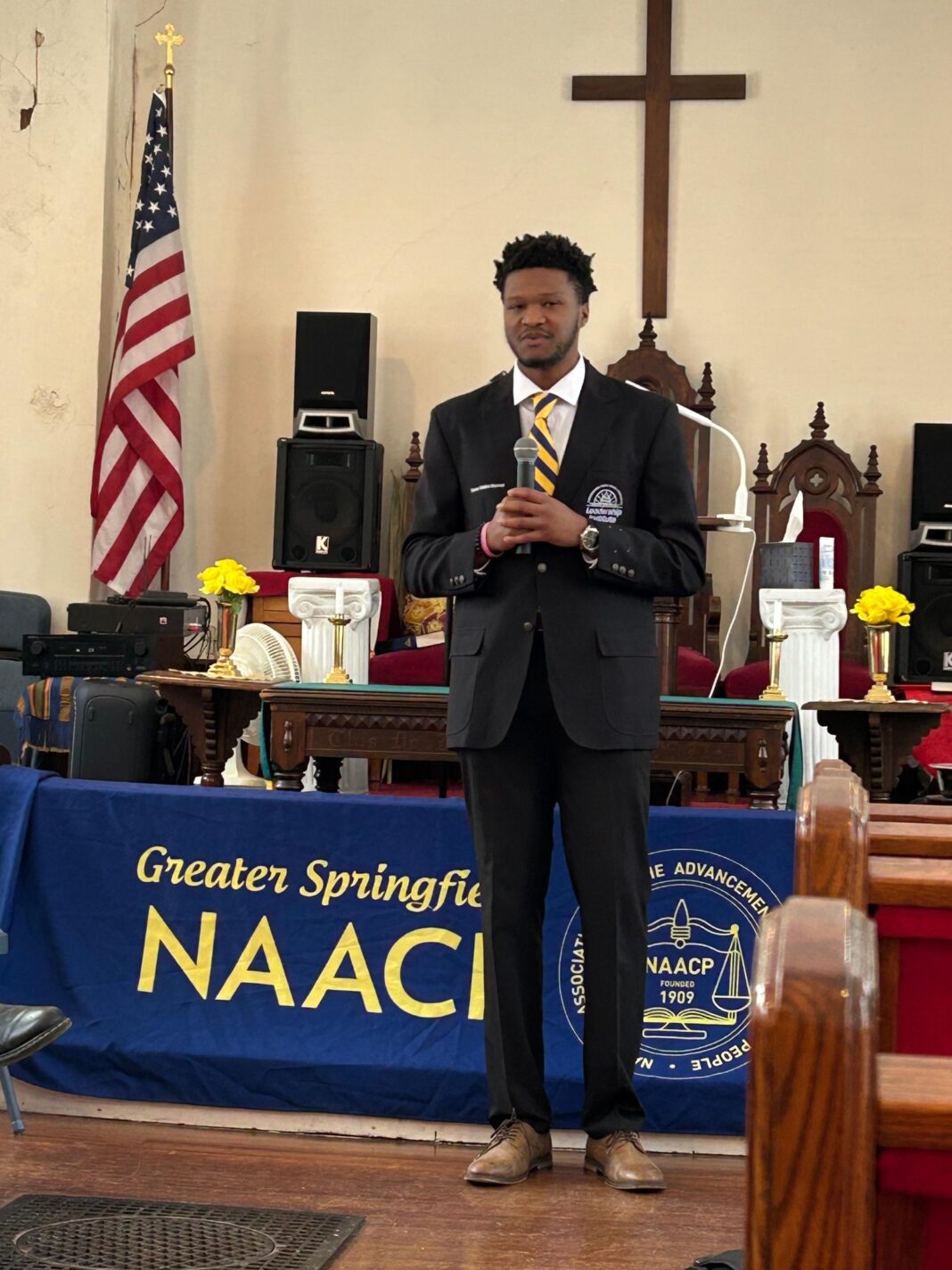

SPRINGFIELD — Elijah Walker-Hoover, a senior at the University of Massachusetts Amherst majoring in Afro-American Studies, is channeling his Springfield roots into bold leadership as president of the UMass NAACP chapter and through his work with the Black Healing Joy and Justice Collective at the UMass Center for Racial Justice.
Originally from Springfield, Massachusetts, Walker-Hoover brings a deep commitment to advancing equity, strengthening student advocacy in higher education, and bridging generational divides in Black community organizing.
In a recent live interview on “The Last Page” hosted by D.Moss, Walker-Hoover outlined his vision for Springfield’s future, emphasizing education, strategic voting, infrastructure improvements, and combating civic apathy.
Family Legacy Fuels Activism
Walker-Hoover credits his activist mother, Serena Walker, who championed anti-bullying legislation after the loss of his older brother, along with community figures like Edith Ray and Sofia Jeffrey, for instilling a sense of Ubuntu—community interconnectedness—in him from a young age.
Growing up surrounded by organizers like Bishop Talbert Swan, he described household conversations centered on public safety, politics, and change, far from typical youth discussions.
Today, he collaborates with mentors including Dr. Shabazz at UMass, Springfield NAACP leaders, and figures like Jesse Lederman, regional director for Sen. Ed Markey.
Priorities for Springfield
Walker-Hoover identified four key challenges:
- Education and Unity: Overcoming ethnic divisions within the Black diaspora to foster solidarity, recognizing shared experiences in a “racialized America.”
- Strategic Voting: Moving beyond party loyalty or personality to demand tangible community benefits, like repairing the MLK Community Center, and voting as a unified bloc.
- Infrastructure Overhaul: Addressing crumbling systems like the highway viaduct that divides the city, blocks waterfront access, and fuels low self-esteem, alongside land hoarding that exacerbates housing shortages.
- Combating Apathy: Countering feelings of powerlessness through direct engagement, like leaders walking neighborhoods and attending everyday events such as AAU games or food pantries.
He stressed intergenerational coalitions, urging older leaders’ historical knowledge to pair with youth energy to boost Springfield’s low voter turnout—one of the state’s lowest.
Vision for Engagement and Accountability
To engage youth, Walker-Hoover advocated meeting them on platforms like TikTok via influencers and clear “how-to” guides for involvement, from door-knocking to social media shares.
For accountability, he called for public spreadsheets tracking officials’ actions, neighborhood forums over downtown meetings, and using elections as report cards.
“Springfield has strong Black voting power spread citywide, not just in Wards 3 or 4—organize it strategically,” he noted, echoing host D.Moss’ insights.
Hope and a Call to Action
Despite challenges, Walker-Hoover sees promise in new developments like a courthouse and food hall, and families choosing to raise children in Springfield.
To aspiring young leaders: Join campaigns like Kareem Kabaoya’s Ward 4 run or become party delegates—start simple.
To veterans like Talbert Swan, Tracy Whitfield, Denise Jordan, and Bud Williams: “Thank you for pouring back into the community where you grew up. We see you.”
Walker-Hoover’s focus on equity in higher education aligns with his NAACP role, positioning him as a rising voice for Springfield’s renewal.