


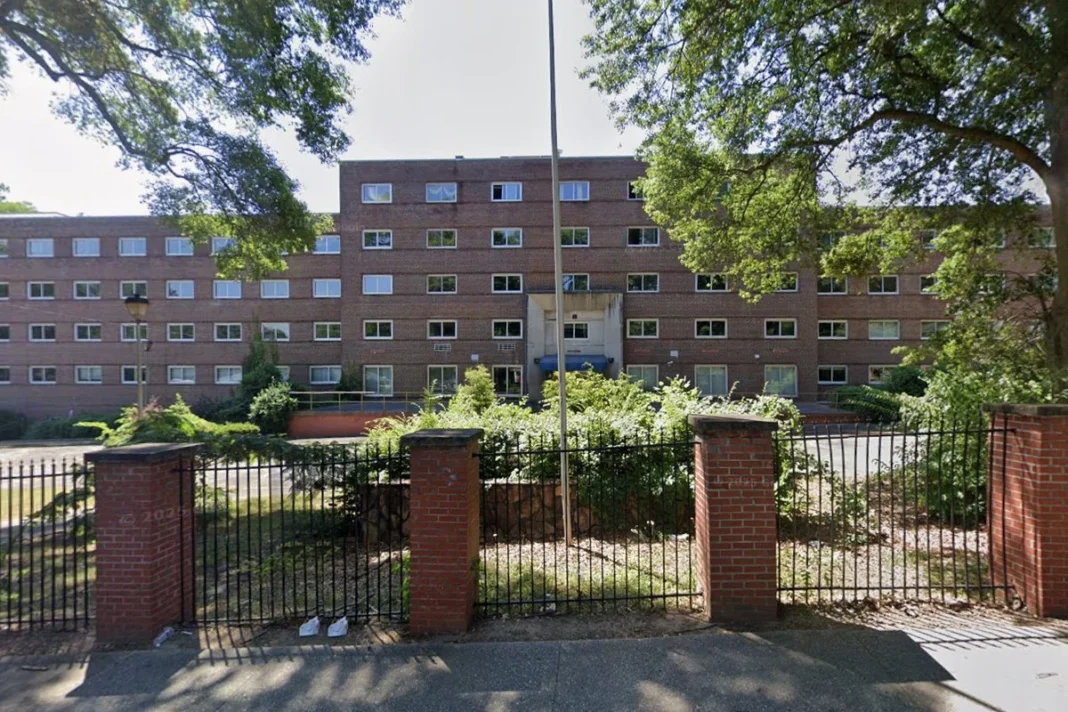

ATLANTA — A West Atlanta property that once served as a refuge for Black travelers during segregation is entering a very different chapter: becoming affordable housing for residents who need stable homes and, in some cases, supportive services.
The Waluhaje Hotel opened in 1951 under Walter H. “Chief” Aiken and became one of Atlanta’s destinations associated with the Green Book, the travel guide created to help Black Americans identify lodging, restaurants and other businesses where they could safely stay during the Jim Crow era.
The building at 239 West Lake Avenue was more than a hotel. Its ballroom became a gathering place for Black Atlantans, and civil-rights history passed through its doors. CBS Atlanta reported that a 1953 telegram documents a visit by Thurgood Marshall, who later became the first Black justice of the U.S. Supreme Court. Former residents and families connected to the property continue to remember it as part of the social life of West Atlanta.
For 79-year-old Janice Milner, the history is personal. CBS Atlanta reported that Milner grew up directly across from the hotel and remembers the neighborhood when the Waluhaje was active. Tarnace Watkins told the station that his parents traveled from Rome, Georgia, and spent time at the property, including attending events in its ballroom.
From Black travel refuge to affordable housing
The property’s role changed over time. Atlanta Housing and other project records identify a later period when the site became associated with the federal Job Corps program. After that use ended, the long-vacant property became part of an effort to preserve the building while addressing Atlanta’s shortage of affordable housing.
The redevelopment, known as Heritage Village at West Lake, is planned as 102 affordable apartments. Reporting from CBS Atlanta and Atlanta housing sources says the development will include 24 units reserved for young adults ages 18 to 24 who are aging out of foster care. The project also incorporates supportive services intended to help residents build greater stability.
Quest Communities CEO Leonard L. Adams Jr. told CBS Atlanta that the project is designed to provide more than housing by connecting residents with services that can help them establish a stronger foundation.
That distinction matters in a city where housing affordability is increasingly tied to questions of displacement, neighborhood history and access to opportunity. The Waluhaje redevelopment does not restore the building to its original purpose, but it does preserve a physical site associated with Black life in Atlanta while giving it a contemporary public purpose.
Why the history still matters
The Green Book was created because Black travelers could not assume that a hotel, restaurant or roadside business would welcome them. Safe places to stay were part of a broader network of Black-owned and Black-serving institutions that helped families move through a segregated America.
The Waluhaje’s transformation therefore carries two stories at once. One is about preservation: keeping the memory of a place that once served Black travelers and hosted community life. The other is about housing: converting a long-vacant property into homes intended for people facing economic and social barriers.
For Atlanta, the project raises a broader question about how historic Black spaces can remain connected to the communities that created their history. Preservation is often discussed in terms of buildings and artifacts. The Waluhaje adds another dimension — whether a historic property can continue serving a community while its physical use changes.
The redevelopment is part of a larger Atlanta effort to create and preserve affordable housing. Atlanta Housing has identified the Waluhaje/Heritage Village project as part of that work, while its historical significance continues to draw attention because of its role in Black Atlanta during segregation.
What happens next: The completed Heritage Village at West Lake will operate as affordable housing with supportive services, including the units designated for young adults leaving foster care. The continuing challenge will be ensuring that the site’s history remains visible even as a new generation of residents makes the property part of its daily life.
Reporting for this story draws on CBS Atlanta reporting and Atlanta housing and development information concerning the Waluhaje Hotel and Heritage Village at West Lake.