



By The Metro Record Staff | October 17, 2026
The 1-54 Contemporary African Art Fair is underway at Somerset House in London, where the 14th London edition is scheduled to run through Sunday, October 18. Published previews describe a programme involving 40 galleries and a broader presentation that places modern and contemporary artists from Africa and its diaspora in conversation with international art history and the global market.
Among the programme highlights reported ahead of the fair are West Wind, a presentation honouring pioneering modern African artists, and Angola, Angolé, Angolema, which brings attention to artists connected to Angola and its diaspora. The programme also includes work by Hassan Hajjaj and discussions addressing African modernism, art-market structures and institutional developments.
1-54 describes itself as an international fair dedicated to contemporary art from Africa and its diaspora, with editions in London, New York and Marrakech. Its name references the 54 countries that make up the African continent. The London fair provides a concentrated view of artists, galleries, curators and collectors working across different national and diasporic contexts.
Visibility is only part of the story
International art fairs can create opportunities for artists to meet collectors, galleries and institutions. But visibility does not automatically translate into fair compensation, sustained representation or greater control over how work is valued and circulated. Those questions are especially relevant when artists and galleries based in Africa are competing in markets shaped by international institutions and collectors.
The fair also creates a chance to challenge the idea that African art is a single style or market. The participating artists and galleries work across distinct histories, materials, geographies and diasporic experiences. Their work should be understood on its own terms rather than reduced to a single identity.
The Metro Record has not independently verified sales totals, visitor numbers or the financial returns for participating artists. Those figures, along with the perspectives of artists and gallery owners, will be important in assessing the fair’s practical impact beyond its exhibition programme.
Questions beyond the exhibition floor
Follow-up reporting should ask which artists are gaining new representation, how sales and commissions are structured, and what opportunities are available to galleries operating from African cities. Interviews with artists and curators can also help explain how historical work is being reconsidered and how the diaspora is shaping contemporary practice.
With the fair running through October 18, it offers a timely opportunity to examine African and diasporic art as both a creative field and a global business whose value depends on relationships, access and cultural authority.
Sources
Wallpaper’s 2026 fair preview · Christie’s overview and dates · Official 1-54 Contemporary African Art Fair website.
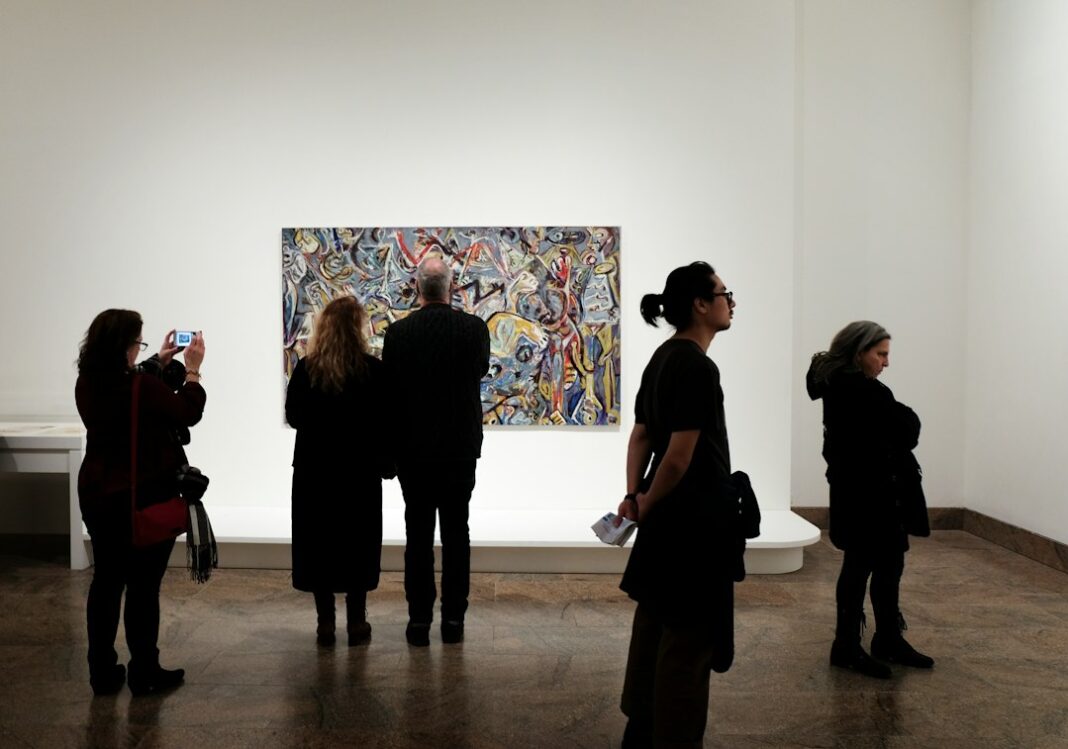
Image: Illustrative stock photograph of a gallery exhibition, by Jessica Pamp via Unsplash. The image is not a photograph of the 1-54 fair.