



Community distrust grows as results remain uncertified nearly a month later
Springfield, MA – City Councilor‑elect Justin Hurst is escalating his challenge to Springfield’s Nov. 4 election results, saying a month‑long delay in reporting hundreds of ballots from three precincts has “shattered” his trust in the integrity of the count and should trigger a state investigation.
Hurst’s allegation of “manipulated” data
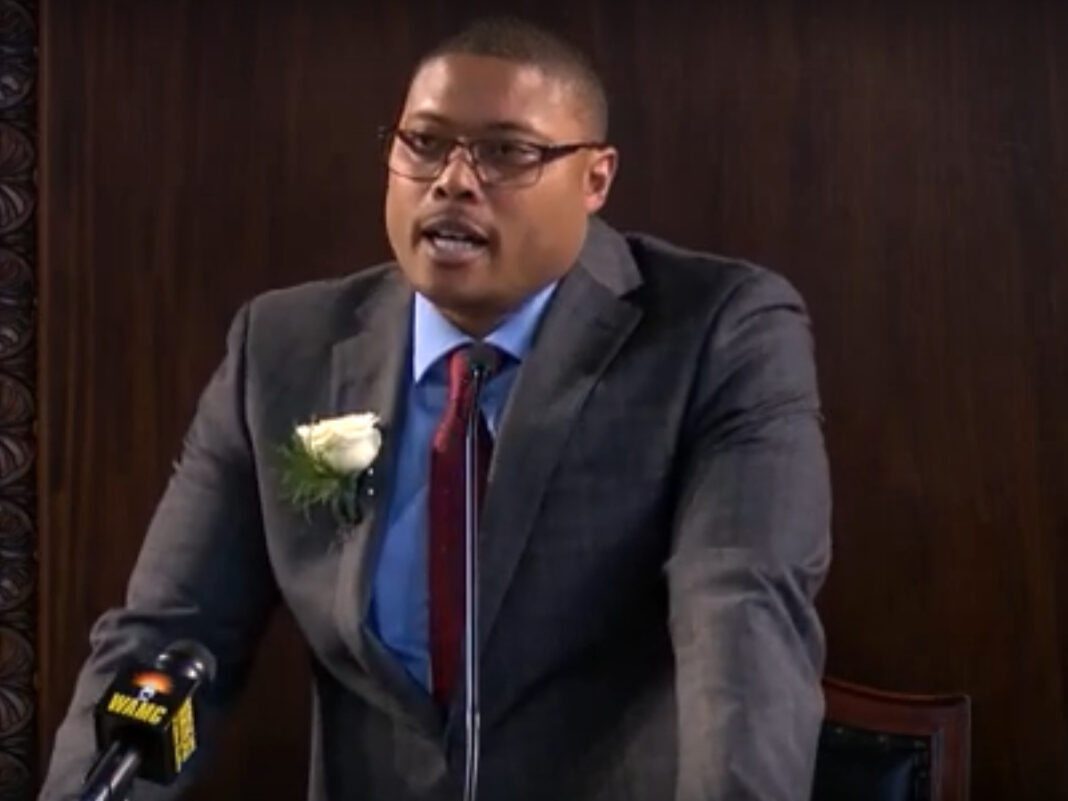
In a recent video and Facebook post, Hurst said he is “convinced that the Elections Office has spent the last month manipulating the election data to the point where [he] can no longer trust that the results of the November 4th election are accurate.” He points to two sets of citywide results: an election‑night report listing 12,623 ballots cast from 122,724 registered voters and a newly certified tally listing 13,100 ballots, with both documents showing 73 of 73 precincts at “100 percent” reporting. The gap of roughly 460 ballots, Hurst says, corresponds to votes from precincts 2B, 8B, and 8B1, which he argues were effectively invisible to the public for weeks.
Hurst says that from Election Day through last Thursday, every public‑records request his team filed for a precinct‑by‑precinct breakdown turned up “zero results” for those three precincts. According to his account, it was only when the Elections Office updated its website Thursday evening that the public first saw any numbers for 2B, 8B and 8B1, even though winners had been declared weeks earlier. He contends that the original totals were 460 votes short of the figures now posted online and that the late addition of those precincts has raised “more questions than answers” about how the city reports, stores, and verifies its vote counts.
What the revised numbers show


Side‑by‑side images posted by Hurst show that the updated totals increased turnout from about 10.29 percent to 10.67 percent while lifting every at‑large City Council candidate’s vote count. Jose M. Delgado’s total rose from 6,661 to 6,947, Justin J. Hurst’s from 5,447 to 5,646, and other contenders such as Tracye Whitfield, Kateri Walsh, Brian Santaniello, Sean Curran, Juan Latorre III and Nicole Coakley all saw similar, if smaller, gains. The order of finish in the at‑large race did not change, and the same five candidates still secured seats, but Hurst argues that is beside the point. For him, the central issue is how ballots from three precincts could be left out of the numbers used on election night while the city, the media and campaigns treated those totals as final.
In earlier comments, election officials said the discrepancy stemmed from an inadvertent release of an earlier, unofficial worksheet that did not yet include all precincts. They said election‑night tallies often differ from results that are eventually certified after local officials reconcile precinct paperwork and incorporate late‑arriving but valid ballots, and they framed the added votes as part of that normal canvass process. Hurst counters that nothing about this situation feels routine, stressing that the document his campaign received was labeled as 100 percent complete and that there was no public indication that entire precincts were missing until weeks later.

Questions to city hall, and to the state
In his video posted on social media, Hurst lays out a series of questions he says Springfield officials have yet to answer. He asks why it took nearly a month to publish results from 2B, 8B and 8B1; how the city can assure voters there are not still more uncounted ballots; what specific races might have been affected; and how frequently similar discrepancies have occurred in past elections. He also wants to know who in city government knew about the missing votes, when they knew, and at what point, if ever, they planned to notify the public and the candidates whose races could have been impacted.
“How can winners be declared with all of the votes not accounted for?” Hurst asks in the video, arguing that the delay may have influenced whether candidates pursued recounts or legal challenges, especially in tight ward contests and School Committee races. He says the pattern has convinced him that Mayor Domenic Sarno and the Elections Office, which reports to the mayor, are “no longer in a position” to credibly investigate themselves or reassure residents about what happened.
Facebook backlash and defense
Hurst’s latest salvo has intensified an already heated debate in his Facebook comments. Supporters such as Charles A. Stokes describe recent coverage of the issue as “spin control” and insist that the documents Hurst’s team received clearly distinguish between the election‑night totals and the “new results” with added votes. Others, including Jhayco Diaz and Shakima Borders, say the episode “seems intentional” and fits a broader pattern of what they see as corruption or incompetence in city government, urging Hurst to “keep spreading awareness” because “corruption hates exposure.”
Critics of Hurst’s framing argue that while the Elections Office may have mishandled communications or labeling, there is no evidence that the late‑added ballots altered who won. Commenters like Alfredo Orejuela note that election‑night tallies are often treated as final for media purposes even though counts are still being reconciled behind the scenes, and they question why anyone would hide a few hundred votes only to release them later when they did not change outcomes. Others, such as Emily Barrows, worry the rhetoric is veering into “stop the steal” territory that could erode trust in local democracy without clear proof of wrongdoing.
History, race and a call for investigation
For many Black residents, the dispute is inseparable from Springfield’s history of racial inequity and political retaliation. Among those amplifying Hurst’s concerns is Darryl Moss, a former aide to Mayor Sarno who recently won a high‑profile federal civil‑rights lawsuit against the city. A jury found that Springfield retaliated against Moss, with what the court described as malicious and “evil” intent, after he engaged in protected activity related to Black Lives Matter protests, awarding him significant damages. Drawing on that experience, Moss wrote that Black voters have “learned to be hyper‑vigilant” because, historically, accepting officials’ explanations at face value has led to disenfranchisement, suppressed turnout, and miscounted ballots.
Moss and others say that when a report claims 100 percent of precincts are counted and is later quietly replaced with a different set of numbers, skepticism is not only reasonable but necessary. They argue that the burden is now on the city to release timestamps, precinct‑level documentation, and a detailed paper trail showing when each set of results was received and entered, rather than relying on broad assurances that “these things happen” in the canvass process.
Hurst’s bottom line is that local explanations are no longer enough. In the closing lines of his video, he says the Secretary of the Commonwealth or the State Attorney General must step in to investigate how the discrepancies arose and to recommend safeguards so “fair and transparent elections” are guaranteed for Springfield voters in future cycles. Whether state authorities will open such a probe remains unclear, but the political fallout from three late‑reported precincts and roughly 460 ballots is likely to reverberate at City Hall well beyond this election.