



By Lamar Cook
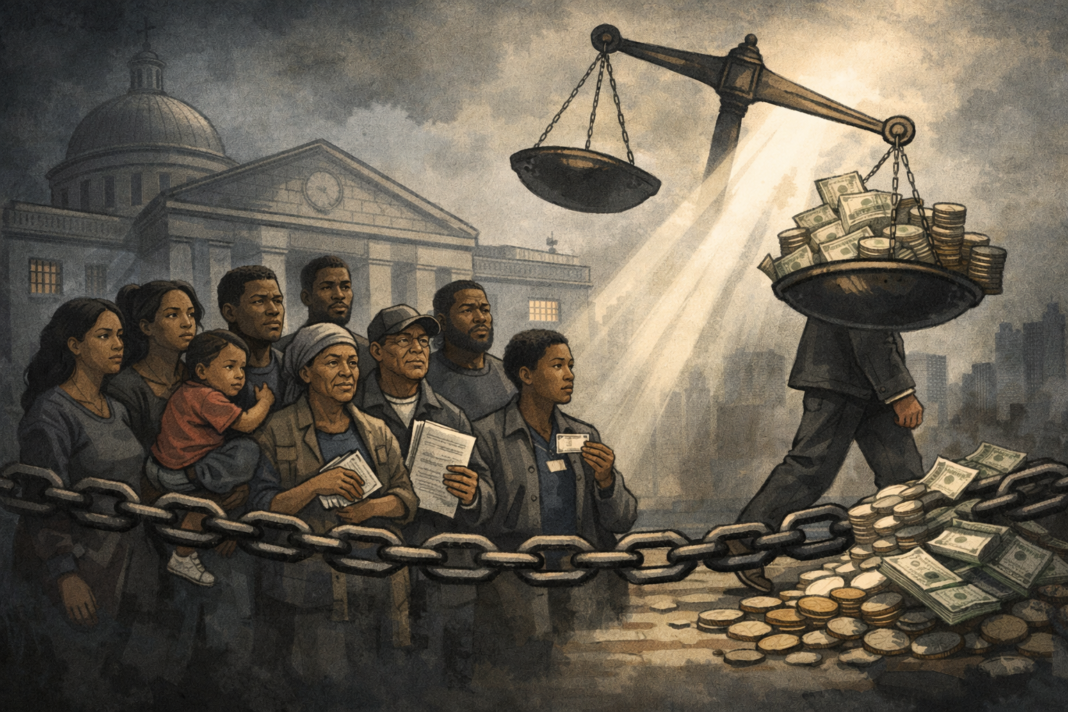
There was a time in Massachusetts when a bail bondsman could step in and bring someone home. That system is gone. What replaced it was supposed to remove the wealth barrier and make the process more equitable. For too many people in Black and Brown communities, it did not remove the barrier. It only changed how it shows up.
I have seen too many people sit in jail not because they were convicted, but because they could not afford to go home. Some had bail set as low as $500.00. In a courtroom, that may not sound like much. For the people I saw inside, it was everything.
I am not speaking from theory. I spent 140 days in a House of Correction. During that time, I watched the same story play out over and over again: people waiting on money they did not have while their lives outside fell apart. Fathers lost jobs. Mothers lost housing. Young people were left in limbo, not because they were found guilty, but because they were poor.
While I was there, I made a promise to the men in A4, my pod, that I would use my voice to help. This is me keeping that promise.
That experience makes one thing clear: in Massachusetts, pretrial freedom is not only about guilt or innocence. It is about access to money.
Research from Harvard Kennedy School backs up that reality. Even after reforms meant to reduce the role of wealth in detention, racial disparities remain. White defendants saw more benefit from the changes, while Black and Hispanic defendants did not see the same level of relief. The wealth barrier may have been reduced in policy language, but in practice it still exists for people of color.
We cannot ignore that reality. Reform that does not reach everyone is not real reform.
Let’s be honest about what this means in everyday life. If you have money, you go home. If you do not, you stay. And staying comes with costs that never show up in a court file: lost jobs, broken families, housing instability, and trauma that follows people long after a case is closed.
Massachusetts jails are filled with people awaiting trial simply because they cannot afford bail. That is not public safety. That is economic punishment.
It also creates pressure that people do not talk about enough: pressure to plead out just to get out, even when the case is unclear, just to escape the weight of incarceration.
I also want to recognize the Massachusetts Bail Fund. It steps in to pay bail so people who cannot afford it can go home and fight their case in the community. Pretrial freedom allows people to stay connected to their families, keep their jobs, and remain stable while their case moves through the system. Their work highlights something important: people are not safer simply because they are locked up while waiting for trial.
But we should not need charitable bail funds to correct what policy created.
This is where lawmakers need to pay attention. If Massachusetts is not going to fully return to a system that allows bail bondsmen, then there must be real alternatives that actually work for working people. Right now, the system still favors those who can pay large lump sums while everyone else waits behind a wall.
Better solutions exist. Pretrial services. Supervised release. Risk-based systems that do not treat poverty as danger. These are the kinds of reforms that actually move us toward fairness.
I am using my voice for those who do not have one: for those still sitting, for those still waiting, for those whose lives are paused while their cases move through a system that too often forgets their humanity.
Massachusetts likes to say it believes in justice. But justice is not equal if freedom depends on your bank account.
We can do better than this. And it is time we prove it.