


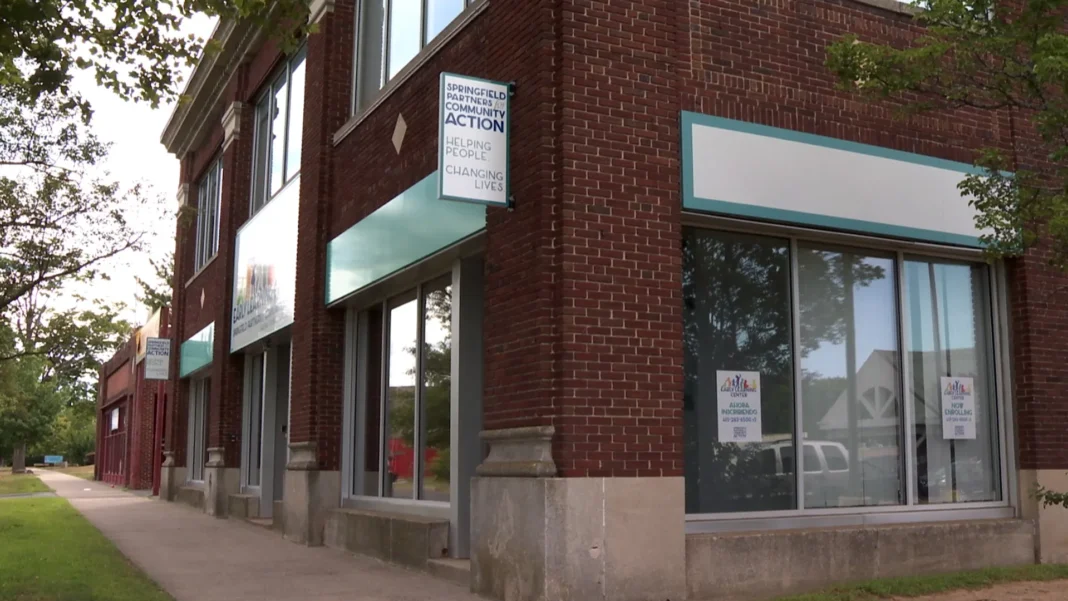

For families across Springfield already struggling with high utility bills, housing instability, and shrinking access to support services, every dollar diverted into electric costs is a dollar not spent helping people survive. That is why a nearly $294,000 state grant awarded to Springfield Partners for Community Action this week matters beyond solar panels and energy policy.
The Springfield Partners for Community Action will receive $293,633 from the Healey-Driscoll Administration to install a rooftop solar system at its main Springfield building, part of a broader state effort to help nonprofits serving low-income communities reduce operating costs and redirect money back into direct services.
The funding comes through Massachusetts’ Low-Income Services Solar Program, administered by the state Department of Energy Resources. State officials say the new 100-kilowatt rooftop solar array is expected to reduce Springfield Partners’ electricity costs by at least 70 percent, saving the organization an estimated $9,700 annually.
In plain terms: less money going to utility companies means more money potentially available for weatherization programs, emergency assistance, housing stabilization, and other services many Black and working-class Springfield residents rely on.
Springfield Partners has long operated as one of the city’s central anti-poverty agencies, particularly in neighborhoods where disinvestment, aging housing stock, and high energy burdens hit residents hardest. Hampden County consistently ranks among the poorer regions in Massachusetts, while Springfield families often face utility shutoff threats and escalating living costs even as state leaders promote Massachusetts as a clean-energy leader.
The grant also highlights a growing tension in Massachusetts climate policy: who actually benefits from the state’s green energy transition.
For years, critics have argued that clean-energy incentives disproportionately favored wealthier homeowners and suburban communities able to afford solar installation upfront. Programs like LISSP are designed to push some of those resources into Environmental Justice communities and nonprofit institutions serving low-income residents.
“As the leading weatherization program in Hampden County, Springfield Partners is committed to improving the energy efficiency of our clients’ homes and advancing long-term sustainability in our community,” said JC Schnabl, deputy director of Springfield Partners for Community Action. Schnabl said the organization expects the solar installation to strengthen operational capacity and expand services for clients.
The Healey-Driscoll Administration announced a total of $394,643 in grants this round. Another $98,010 went to Cape Abilities, a nonprofit serving individuals with disabilities on Cape Cod.
State Energy Resources Commissioner Elizabeth Mahony said the goal is to help nonprofits serving vulnerable populations lower costs while improving air quality in their communities.
The Springfield project is expected to generate part of the estimated 119.8 kilowatts of new solar energy added statewide through this funding round. State officials estimate the combined projects will save participating nonprofits more than $16,000 annually in electricity costs.
The next round of grant applications opens May 12, as Massachusetts continues using public funding to expand clean energy infrastructure across nonprofit and community-based organizations.
For Springfield residents, the larger question will be whether investments like this remain isolated projects — or become part of a broader strategy to reduce the disproportionate economic and environmental pressures facing Black and low-income neighborhoods across the city.