



By David Sinclair

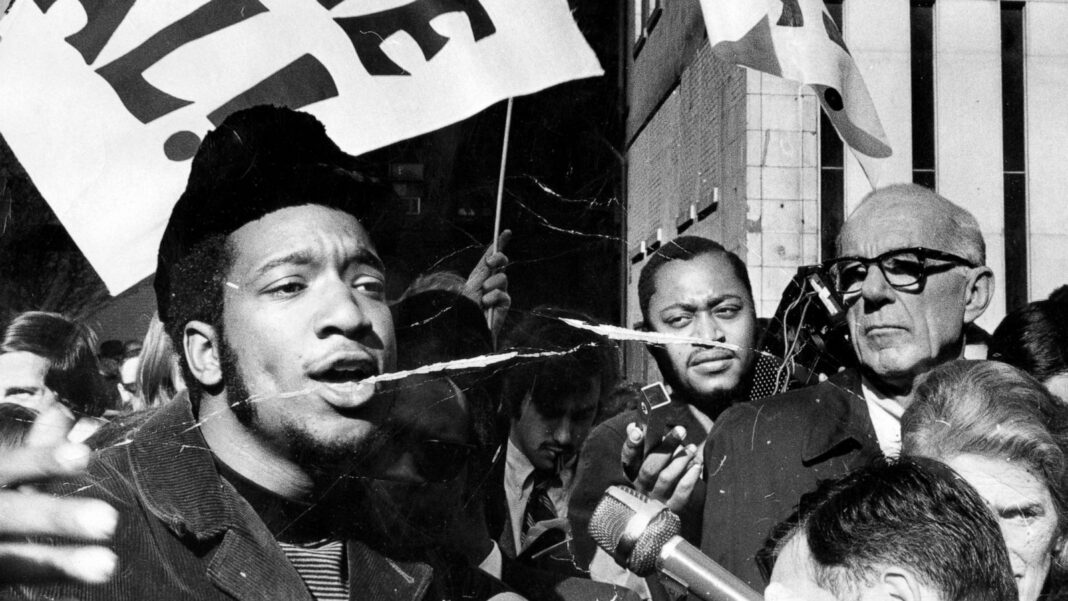
Fred Hampton did not choose the word “rainbow” because it sounded poetic. He chose it because it told the truth. It described a spectrum of people—Black, Puerto Rican, white Appalachian, Indigenous, immigrant, poor, and working class—whose lives were different in color but united in struggle. The Rainbow Coalition was never a slogan. It was a strategy, a plan to turn fragmented pain into organized power.
In Chicago, Hampton and his comrades did something revolutionary. They crossed lines that America worked hard to keep intact. The Black Panther Party did not limit its vision to Black communities. It built alliances with the Young Lords and the Young Patriots, Latino youth fighting displacement and white Appalachian migrants struggling to survive in the city’s forgotten corners. That act alone was subversive. It terrified the powerful because it revealed what they feared most: the moment when people who have been taught to hate each other learn to fight together.
The rainbow symbol carried three undeniable truths.
First, diversity without shared purpose is decoration. Hampton’s coalition was not about optics. It was about action. It confronted police violence, poverty wages, inadequate housing, and broken schools. The survival programs—free breakfasts, community clinics, and political education—were not handouts. They were blueprints for collective self-determination and a challenge to institutions that failed to serve the people.
Second, race and class are not competing realities; they are partners in oppression. Hampton never suggested ignoring race. He called for understanding how race is manipulated to divide working people and distract them from the question of who benefits from their division. The rainbow was not colorblind. It was color-aware, class-conscious, and honest about power.
Third, real coalition is not comfort. It is work. It requires every partner to bring what they have, face what they fear, and let go of what no longer serves the greater good. For the Panthers, that meant structure, discipline, and study. For the Young Patriots, it meant confronting symbols that wounded their allies. Coalitions either evolve through honest struggle or crumble under polite silence.
We revisit this story because the conditions that birthed it have returned, dressed in new language. Diversity has become an industry, but unity has not become policy. Costs of living rise while wages stagnate. Schools are underfunded, housing unaffordable, and health care unreachable. The problems are familiar. The answers remain radical in the truest sense of the word: go to the root.
A modern rainbow coalition would build from the ground up, not the headline down. It would start with demands that matter to families: rent stabilization, clean water, fair pay, mental health care, and schools funded by need rather than neighborhood. If a demand cannot be discussed at a kitchen table, it is not real coalition work.
It would center education, not just mobilization. Protests can light the fire, but education keeps it burning. Hampton’s strength was not just charisma; it was clarity. He taught people why they were hurting and how they could change it.
It would embrace shared risk. When eviction is seen as only a tenant’s problem, or police reform only a Black problem, coalitions fail. Real unity means showing up for each other until our separate struggles become one shared cause.
And it would demand courage over comfort. Building coalition requires honesty that may cost applause. It means telling donors, pastors, and friends that justice cannot coexist with nostalgia for inequality.
The government understood the danger of Hampton’s vision the moment he articulated it. That is not speculation—it is historical record. He was only twenty-one when he was killed because he proved that food, knowledge, and solidarity could challenge an empire built on fear. If we only remember his death, we inherit grief. If we remember his method, we inherit direction.
The rainbow teaches a simple truth. The same forces that isolate us can only be defeated together. The rainbow does not erase difference; it aligns it. It does not deny history; it redeems it through action. And it does not ask for permission. It begins wherever people are hungry, tired, and brave enough to try again.
Rainbows do not appear without storms. But when light breaks through, we see how many colors it takes to form one arc. Our task is not to admire it. Our task is to follow it to the ground and build.
About the Author
David Sinclair is a political essayist and cultural critic based in Chicago. His work explores the intersection of race, class, and power through a historical and contemporary lens. He writes regularly for The Metro Record and West Georgia Pulse, where his essays challenge readers to reimagine justice, solidarity, and community power in the modern age.