



From holding power accountable to celebrating everyday milestones, Black news outlets help communities tell their own stories and keep a record of what matters.
A young person graduates. A neighborhood business opens its doors. A local author publishes a first book. A family celebrates a milestone, an artist takes the stage, or residents organize to demand answers from their elected officials.
These moments deserve attention, not because they involve celebrities or attract national headlines, but because they matter to the people who live them.
That is a powerful reason to support Black news outlets. Our communities deserve more than occasional coverage. They deserve a consistent place in the public record, where their achievements, concerns, creativity and everyday lives are treated as worthy of attention.
Supporting Black media is not simply about helping a publication stay in business. It is an investment in ownership: ownership of our stories, our institutions and the way our communities are understood.
A Tradition Rooted in Speaking for Ourselves
The Black press began with a clear understanding that being talked about is not the same as being heard.
In 1827, Samuel Cornish and John Russwurm launched Freedom’s Journal, the first African American owned and operated newspaper in the United States. Its founding declaration made the purpose plain: “We wish to plead our own cause. Too long have others spoken for us.”pbs
That mission extended beyond responding to injustice. Early Black newspapers reported political debates, business activities, religious gatherings and social events. They published biographies and notices of births, marriages and deaths. Alongside churches, schools and community organizations, they helped build and sustain Black community life.searchablemuseum
The lesson remains relevant: A community needs journalism that can confront what threatens it while also documenting what sustains it.
We need reporting about discrimination, public policy and unequal opportunity. We also need stories about the teacher making a difference, the entrepreneur taking a risk, the neighborhood elder preserving history and the students whose accomplishments might otherwise go unrecognized.
Our lives have many dimensions. Our coverage should reflect them.
Visibility Should Not Begin With a Crisis
Black communities should not have to experience tragedy before becoming newsworthy.
A fuller picture includes joy, ambition, disagreement, service, cultural expression and ordinary people doing meaningful work. Scholarship on the Black press describes its longstanding role in sharing African Americans’ ideas, achievements and cultural contributions, both within their communities and with the wider world.academic.oup
That kind of storytelling matters because it makes room for people to be seen as more than a statistic, a stereotype or a brief appearance in someone else’s narrative.
A graduation is a family’s pride. A business opening represents someone’s work and financial risk. A community fundraiser reflects people deciding that a neighbor’s needs matter.
Reporting these stories says something important: This happened here. These people contributed. Their lives belong in the record.
Support Should Strengthen Accountability, Not Buy Silence
Celebration is only part of the job.
A strong Black news outlet must also be willing to ask uncomfortable questions: How is public money being spent? Who benefits from a development project? Are residents being heard? Are leaders keeping their promises?
The Black press has historically served both as a source of information and as an agent of social change. Those roles demand more than promotion. They require a willingness to examine conditions and challenge power.academic.oup
Supporting Black journalism should never mean expecting favorable coverage in return. A business advertisement is not a purchase of editorial approval. A subscription is not a guarantee that every article will reflect the reader’s opinion.
The healthiest relationship between a news outlet and its community includes trust, scrutiny and room for disagreement. Readers should expect accuracy, fair treatment, transparent corrections and clear distinctions between independent reporting and paid promotional material.
Supporting an institution and holding it to high standards are not competing responsibilities. They belong together.
Appreciation Needs to Become Participation
It is easy to say a community needs its own media. The more meaningful question is whether we are willing to help sustain it.
Reporting takes work. Someone must attend the meeting, interview the sources, check the details, edit the article, take the photographs and prepare the story for publication. A finished piece may take only minutes to read, but producing it requires time and resources.
For readers, support can mean paying for a subscription or membership where available, making a contribution, reading consistently and sharing links to the outlet’s original work.
For businesses, it can mean including Black owned news outlets in advertising plans, rather than asking them for free publicity when a grand opening or special event approaches.
For churches, nonprofits and community organizations, it can mean budgeting for announcements and promotional services, submitting information early and responding when reporters seek interviews or documentation.
And for everyone, it can mean sending a useful news tip before the moment has passed.
Not every act of support requires money. But financial support should not be treated as an afterthought while we expect professional work.
There Is Room for Your Story
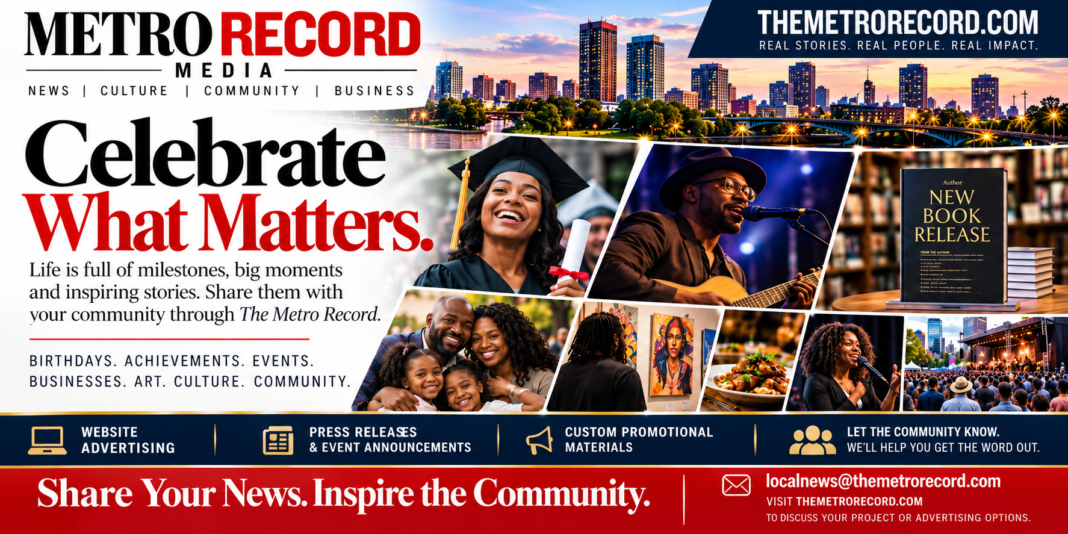
The Metro Record’s invitation to “Celebrate What Matters” captures the everyday side of this relationship. Its community promotion highlights birthdays, graduations, career achievements, business openings, book releases, concerts, art exhibits and fundraisers, alongside advertising, announcement writing and promotional services.Metro-Record-Media-Community-Flyer.jpg
These are opportunities to bring community life into view. They also give residents, entrepreneurs and organizations practical ways to invest in a publication while reaching the people they want to connect with.
The distinction should remain clear: Purchasing a promotional service supports visibility; independent news coverage must remain guided by editorial judgment. Both can serve a community when readers understand which is which.
The larger point is that supporting Black media does not have to be an abstract commitment. It can begin with the next event you are planning, the business you are building, the story you think deserves attention or the advertising dollars you already intend to spend.
Black news outlets should not have to choose between documenting our struggles and celebrating our lives. We need them to do both, and we should help create the conditions that make both possible.
Because when we say our stories matter, our support should show it.