
An interview series in two parts – This is Part 2
At the Development Table: Conan Harris on Black Business, Ownership, and Opportunity
Harris wants participation in major projects to help smaller companies build capacity, workers support their families, and Black entrepreneurs gain access to growth.
For Black entrepreneurs, access to a major project rarely begins with the project. It begins earlier, with who knows it exists, who is prepared to pursue it, and who is invited to the table.
Conan Harris came to that question through a more modest need. His family required more room.
He and his wife owned a small condominium where they lived with their daughter, Cora. As Cora grew, they needed more space. Harris bought a two-family property, renovated it, and later developed a basement accessory dwelling unit with a team. Renting the extra space to traveling nurses, he said, generated enough income to cover his household bills.
“That changed my life,” he said.
It also changed his understanding of what real estate could make possible. He refinanced the property, used the proceeds to buy another multifamily building, redeveloped its units, and kept expanding his portfolio.
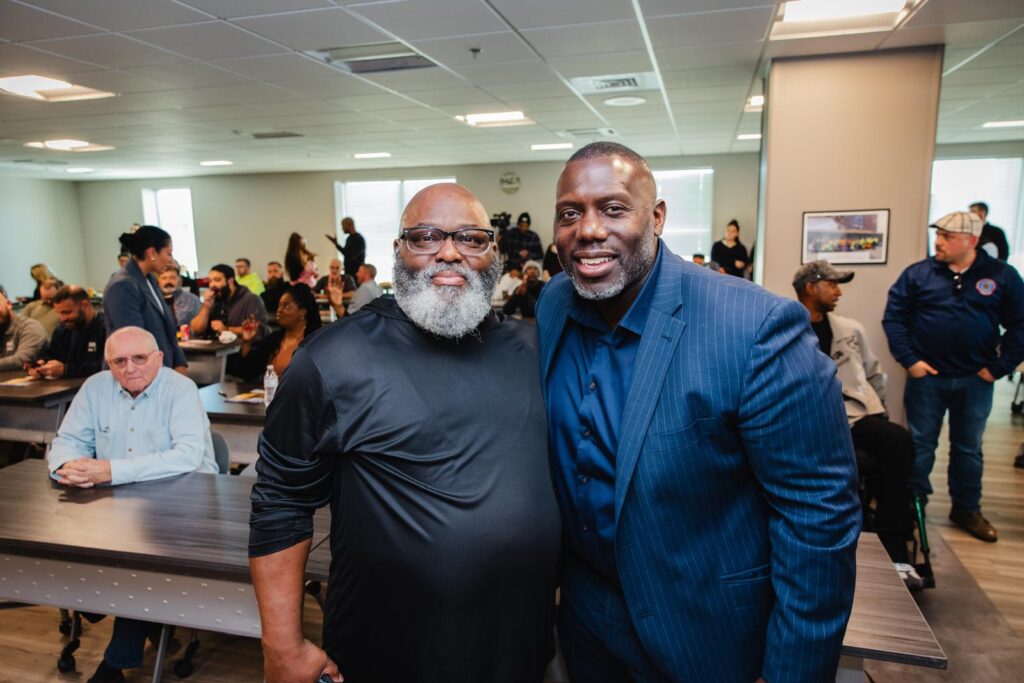
Now, through Liberty Junction, Harris wants opportunity to reach beyond his own business. A former violence-prevention worker and Boston public safety official, he brings the same question to development that he brought to community service. Who else gains a chance to move forward? His public work included My Brother’s Keeper Boston and helping establish the city’s Office of Returning Citizens.
“How many more people had an opportunity because I existed?” he asked.
The move from residential properties to commercial development required study, partnerships, and a willingness to lose. With a partner experienced in leading a commercial real estate firm, Harris studied the market for two years before pursuing projects independently.
“We got a lot of no’s, man,” he said.

He recalled assembling strong teams, developing concepts, working through financial projections, and spending money on predevelopment, only to reach the final stages of competitions and lose. His advice to entrepreneurs comes from that experience. Become good at what you do. Remain consistent. Be prepared to pivot without treating every setback as a reason to quit.
But persistence is not the same as equal access, and Harris does not pretend otherwise. He names capital and opportunity as continuing barriers for small businesses.
The scale of Black entrepreneurship makes the question harder than it first appears. Black people are starting businesses. That is not in doubt. What is in doubt is how many of those businesses are able to grow.
According to the U.S. Census Bureau, Black-owned businesses accounted for approximately 201,000 employer firms in 2023, or 3.4 percent of all U.S. employer businesses. Those firms generated about $249 billion in receipts.
The picture shifts sharply when businesses without paid employees are counted. Black-owned businesses made up approximately 4.4 million nonemployer firms, or 14.4 percent of all nonemployer businesses, generating about $128.7 billion in receipts.
The distinction matters. Black-owned firms have a substantial presence among businesses without paid employees and a much smaller share of those that employ workers.
For owners who want to grow, the question is not only how to sustain their own work. It is how to build a business capable of supporting employees, competing for larger contracts, and creating opportunities for others.
The figures do not explain why individual firms have no employees, and not every owner intends to hire. They do show that a discussion of Black business opportunity cannot stop at counting businesses. It must also examine the pathways available to those trying to grow.
That is where Harris places his emphasis. He wants smaller companies to have the preparation, relationships, and fair chance they need to take part in major projects.
Asked what people already positioned to help could do, his answer was direct.
“Cut the red tape.”
He wants the thinking that says “they can’t” or “we shouldn’t” replaced by a willingness to identify what people can do and how others can help.
“We have to be that extraordinary support,” he said.
Liberty Junction gives Harris an opportunity to put those ideas into practice on a major public development.
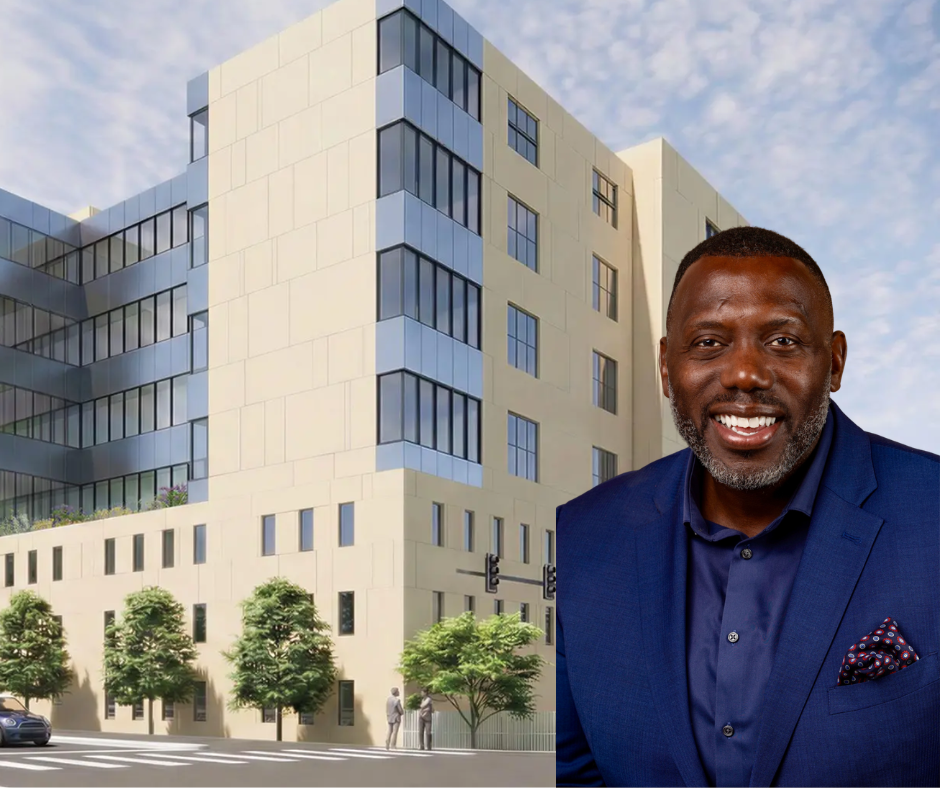
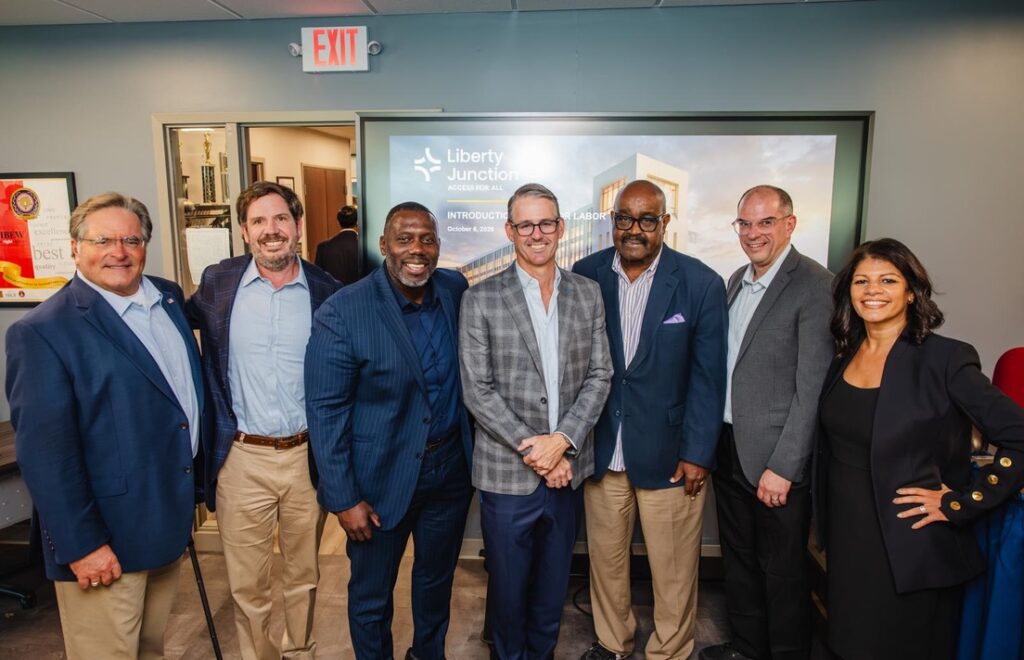
His firm, CoJo Partners, also identified as CoJo Real Estate, joined FD Stonewater and Suffolk Construction on the team selected by the Commonwealth of Massachusetts to develop and lease a new Springfield Regional Justice Center at 125 Liberty Street.
CoJo was formed by Harris and John Barros, the interim head of the Massachusetts Convention Center Authority. Harris is also the husband of U.S. Rep. Ayanna Pressley.
For Harris, however, the larger question is what a development of this scale can make possible for people who have historically had limited access to major projects.
He wants participation to extend beyond the companies and individuals who routinely secure such opportunities. His focus is on helping smaller businesses build capacity, connecting workers with career pathways, and creating opportunities that can strengthen families and communities long after construction is complete.
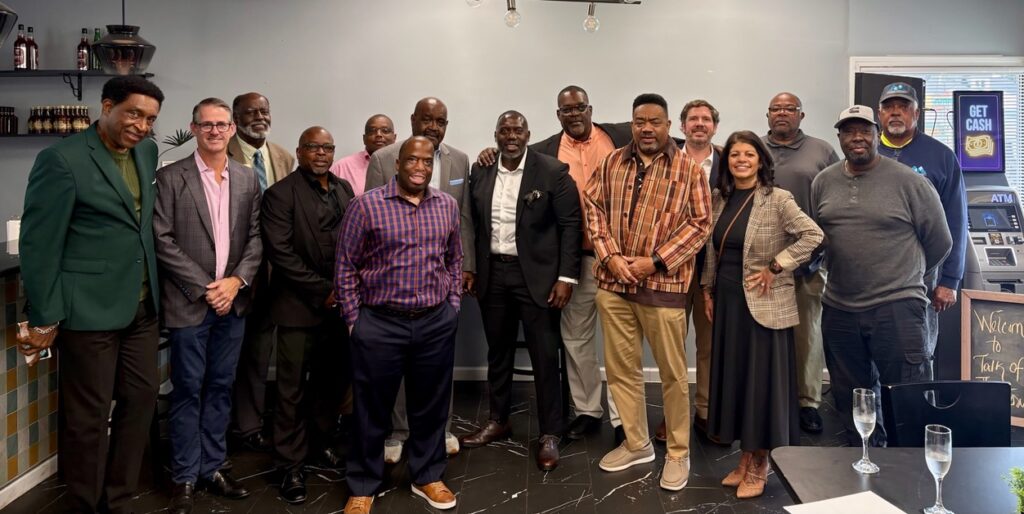
He described meeting with community groups and building systems to connect interested participants with information and support. His plans include tracking people interested in workforce preparation, providing professional development for smaller companies, and engaging contractors before bidding opportunities arrive. He also pointed to joint ventures as a route for smaller firms that lack the bonding capacity to pursue substantial work on their own.
The reasoning is practical. Knowing a project exists is not the same as knowing how to pursue work on it. Being invited to participate is not the same as being prepared to compete.
Harris also sees Black ownership as significant beyond any single development. People need to see themselves represented as owners, developers, contractors, and workers. If they never see people who look like them owning and developing major projects, he asked, what encourages them to pursue those opportunities?
“We belong everywhere,” he said.
His vision is for participation to create relationships, experience, and capacity that lead to further opportunities. Those are aspirations, not claims that the results have already been achieved or that specific levels of participation have been guaranteed.
When Harris describes success, he pictures a young man whose life could have gone another way becoming a union journeyman and supporting his family. He thinks about institutions that keep serving people beyond his own involvement.
Those examples explain what he wants from business, too.
“It’s not about any dollars that I acquired,” he said. “It really is about who comes along in the ride and who’s a part of it.”
He envisions smaller companies growing stronger, workers supporting their families, and people returning from incarceration finding a viable path forward. He hopes the businesses participating today can create opportunities for their children and grandchildren.
For Harris, possibility must become something people can act on.
Near the end of the interview, he spoke about traveling to meet Black community members, looking people in the face, and connecting them with the opportunity he sees ahead. That outreach is not incidental to the project. It is part of what makes the project worth doing.
“We’re not going to miss out on this boat,” he said.