


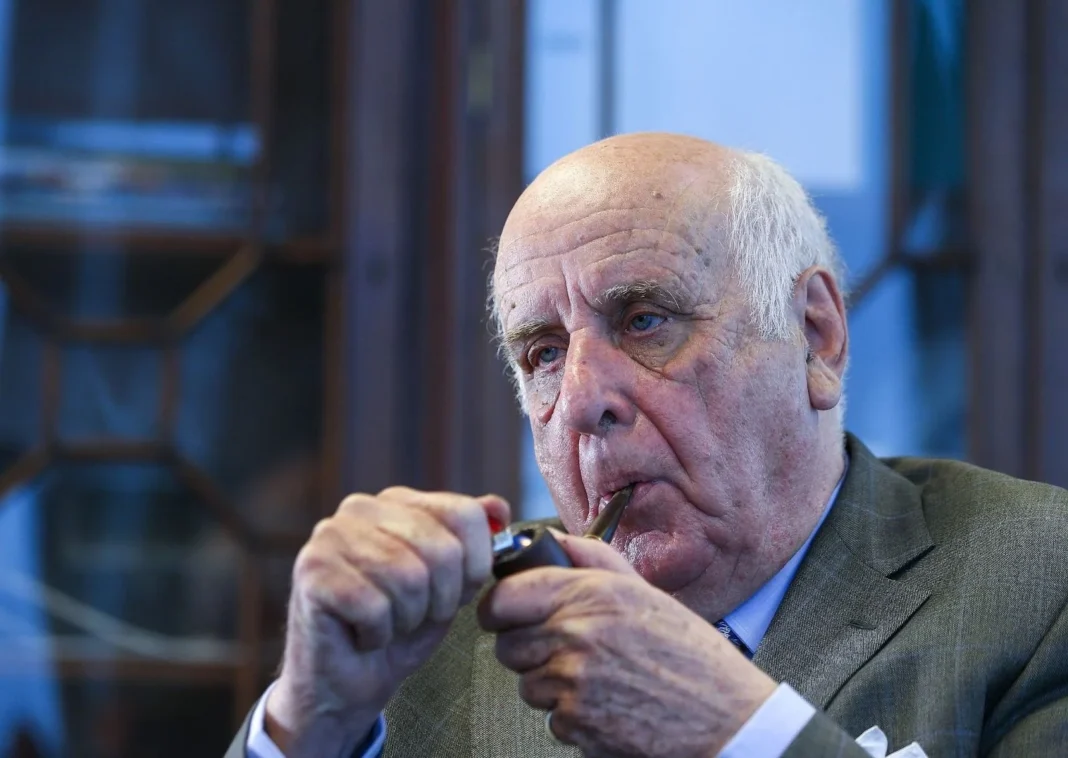

A novice diplomat at the time, Etienne Davignon is the only person still alive among 10 Belgians accused by the Congolese leader’s family of complicity in his murder.
A 93-year-old former Belgian diplomat has appealed a court ruling ordering him to stand trial over his alleged role in the 1961 killing of Congolese independence leader Patrice Lumumba, setting up a potentially historic legal battle more than six decades after the assassination.
Etienne Davignon, who was a junior diplomat at the time of Lumumba’s death, is accused of “participation in war crimes” linked to the unlawful detention and transfer of the Congolese prime minister, as well as his denial of a fair trial. He is not charged with carrying out the killing itself.
“Mr. Davignon has decided to lodge an appeal,” his lawyer, Johan Verbist, said Friday.
Davignon is the only surviving Belgian among 10 officials accused by Lumumba’s family of complicity in the assassination, which has long symbolized the violent legacy of colonialism and Cold War interference in Africa.
Lumumba, Congo’s first prime minister after gaining independence from Belgium in 1960, was overthrown within months amid political turmoil and tensions with Western powers. He was executed on January 17, 1961, in the breakaway region of Katanga, with the involvement of Belgian officers and mercenaries. His body was later dissolved in acid.
Belgian authorities have previously acknowledged the country’s “moral responsibility” in Lumumba’s death, but no official has ever faced criminal trial.
Prosecutors argue that Davignon’s role in diplomatic and administrative processes at the time contributed to Lumumba’s illegal detention and eventual transfer to Katanga, where he was killed. They contend that such actions meet the threshold for complicity in war crimes, which carry no statute of limitations under international law.
Davignon’s legal team is expected to argue that he held a minor position with no decision-making authority and that there is insufficient evidence linking him directly to the events that led to Lumumba’s execution.
A closed-door hearing will now determine whether the case proceeds. If the appeal fails, the trial could begin as early as January 2027, according to lawyers representing Lumumba’s children.
If it moves forward, the case would mark the first time a Belgian official is tried in connection with Lumumba’s killing, a development that could have far-reaching implications for how former colonial powers confront historical injustices.